Introduction
A commonplace book goes beyond just a place to store quotes, but serves as a reference of intellectual exploration where ideas are gathered, revisited, and reimagined by the creator. They play an important role in having a place to document information but also allow for engagement on a deeper level and ensure ideas are preserved. A commonplace book takes on many forms but the concept remains the same. It is a notebook where an individual catalogs information. They create a key or index system to help easily organize the entries inside the book. Rooted in a long tradition stemming from antiquity, commonplacing now has experienced a revival through social media with users showcasing their systems and crafting a place for others who want to bring back this practice. This digital project reinterprets the traditional physical commonplace book transforming it into a digital format that allows for online engagement. By Pens and Pixels: Echoes of Romanticism a Digital Commonplace Book seeks to showcase romantic poetry by creating an entry for each poem. Through this engagement with the poem it creates a space of intellectual discovery and reflection. By curating poems that were read over the course of the semester, this commonplace book serves as a way to engage with the literature while adding a personal touch. Through the selection and design of the book, this project captures the inquisitive spirit of the Romantics while exploring the medium of commonplacing and how it can still be used today.
The Romantic Tradition & Commonplace Books
The commonplace book remains a tradition practiced as far back as the classical period where it was used with students as a memory aid and a place to store information (Dacome 2004, 603). During the eighteenth century commonplacing was a practice that helped to catalogue information but most importantly help focus on the question of the self and expand on philosophical, historical, and social ideas of the period. The commonplace relies on a key or index that helps to organize entries so the information can be accessed easily. John Locke published his method of commonplacing which became incredibly popular and was still used by practitioners in the eighteenth century (Dacome 2004, 607). His method included having every letter in the alphabet accompanied by every vowel and then a page number next to that vowel (“Structuring a Commonplace Book (John Locke Method)” 2017). An example would look like, “A | i 42.” This would keep things alphabetical and organized. This key simplified the system making the writer be able to utilize space within the book and then easily mark it. Not everyone used this method and there were still critiques of it but Locke’s method provided a standard which helped to get people thinking more about how the index plays an important role in the creation of the book itself.
Who else kept commonplace books in the eighteenth century? Dorothy Wordsworth kept a commonplace inside there were letters, recipes, home remedies, newspaper clippings, and her own poems (“Exploring Dorothy Wordsworth’s Commonplace Book,” n.d.). This provides a capsule into her life and what she valued. By having one place to document all this information she showcases what the romantics were cataloging. One can assume her brother William Wordsworth practiced something similar especially since her commonplace book features handwriting by other people. Another person, Samuel Taylor Coleridge also kept one with his own poems written inside. Alongside his work he also featured fragments from other poets at this time (“Coleridge Reworks Several Poems in His 1796 Notebook” 2010). These are just some of the romantic poets who kept commonplace books (Pfuntner 2016).
Curating Poems, Themes, & Categories
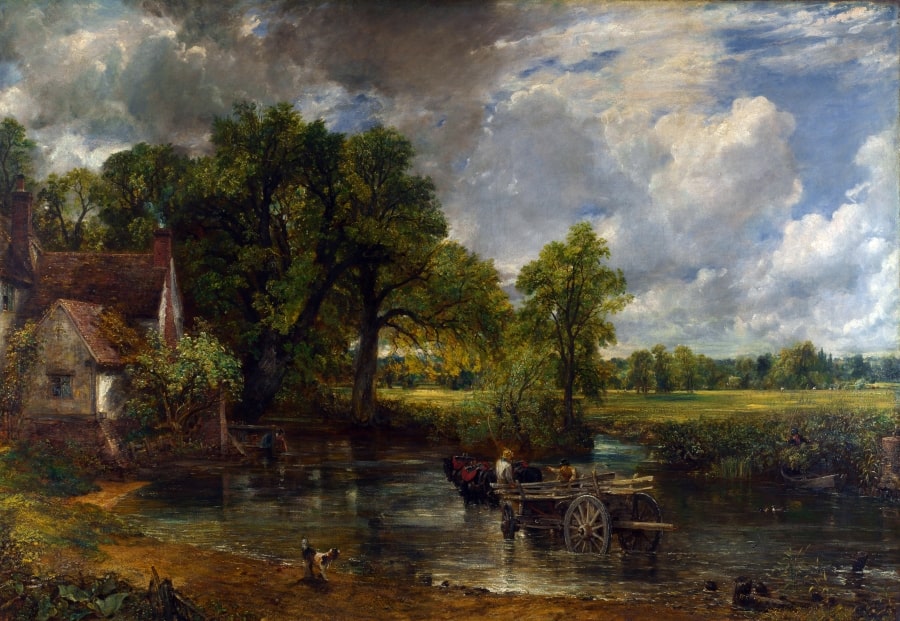
When deciding on the poems to include in this book I wanted to incorporate ones that were part of my weekly reading responses since I had spent time ruminating on my thoughts on them but I also included others from our reading list which when combined together helped to tell a cohesive story. There are many poems that are longer, therefore I selected one excerpt from each to highlight in the book so the reader could get a taste of the poem. This would encourage them to read it in its entirety! Each poem features an image that best represents the visuals of the poem, this includes either a painting or photograph. Next comes the entry which has a standard format that repeats for each poem, including a one word theme, aesthetic category, a historical fun fact, and personal reflection. After the table of contents you will see a key that lists the themes and categories that are used throughout the book. When deciding on these there were several important factors. Firstly, once I had selected the poems I looked for similarities and grouped them in a concise way. This allowed for the poems to have one aesthetic category that embodied its entirety along with a theme. These themes and categories bring the poems in conversation with each other. Each class has a theme and I wanted to mimic this by bridging the poems this way.
These are the following themes: eclipse, haunting, time, curiosity. The poems are grouped into these themes in the book so when you read it you will pick up on patterns between them. Eclipse combines light and dark; the poems in this theme deal with topics that move between these two things. It also encompasses light that can be covered by darkness just as the sun becomes covered by the moon. Haunting pertains to something that lingers in the shadows. This could come in many forms as we see in the poems and does not always need to be supernatural but can evoke that feeling. It deals with things that refuse to be forgotten and cannot escape the minds of those who have been touched by it. While time deals with its passage, how things change from moment to moment. These poems use time to explore how this has an impact on the mind, the body, and emotions. Finally curiosity, this deals with the exploration of knowledge, need for discovery, and the questions that probe this feeling. These poems look to seek truth, unravel mysteries, or challenge ideas. All four of these themes encompass romantic poetry and what these poets are seeking to accomplish with their words.
Meanwhile the aesthetic categories are: whimsical, ephemeral, sublime, animalistic, elegiac. Whimsical poems deal with those that have a magical element to them. It is something that feels very positive while including some type of magic. While ephemeral refers to something that is short-lived or transient, lasting for only a brief period of time. It often conveys the idea of beauty or experiences that are fleeting, emphasizing their temporary nature. The sublime stems originally from Longinus in ancient Greece and gets explored in Edmurd Burke’s A Philosophical Enquiry into the Origin of Our Ideas of the Sublime and Beautiful. Poems that fall into this category deal with concepts that are visually appealing but also unsettling. Things that evoke those strong emotions and also sense of suspicion. Animalistic categorizes the poems which center around animals. Finally elegiac refers to a tone or style that expresses sorrow, lamentation, or mourning, often in remembrance of someone who has died or suffered. It is commonly associated with elegies and mourning. Those poems either feature some type of person who undergoes this or a feeling that deals with this loss.
By Pens & Pixels
Commonplacing came into my life at the beginning of the year and it has become something so valuable. When creating this project it felt like an extension of my own personal commonplace book which allowed for me to be creative and reflective. Knowledge preservation is important and needs to be something we continue to do. Even though my commonplace lives in the digital world it still engages with the form in a meaningful way. I realized the significance of holding onto information and in a world where we constantly consume it can be easy to lose that. When people spend hours on their phone scrolling through TikTok or Instagram they are learning, they are consuming, and they are engaging with information. But what happens once that thirty second video ends and you move to the next one. Will you remember what video you watched three minutes ago? How about when you read a book and a quote sticks out will you forget it as soon as you move onto the next book? Our memories are strong but they won’t hold onto everything which is why having a place to store this information becomes incredibly important. In a time where consumption continues to grow and capitalism thrives on this, the act of slowing down, engaging with ideas in a meaningful way, and reflecting becomes revolutionary. This commonplace book showcases one way of creating a time capsule for this semester and capturing the things I’ve learned while also being something I hope you, the reader can enjoy. I encourage you all to start your own commonplace book and preserve what you think is important.
Works Cited
Commonplace Corner. “Structuring a Commonplace Book (John Locke Method),” February 24, 2017. https://commonplacecorner.wordpress.com/2017/02/23/structuring-a-commonplace-book-john-locke-method/.
Dacome, Lucia. “Noting the Mind: Commonplace Books and the Pursuit of the Self in Eighteenth-Century Britain.” Journal of the History of Ideas 65, no. 4 (2004): 603–25.
Pfuntner, Deborah Lynn. “Romantic Women Writers and Their Commonplace Books,” 2016. https://www.semanticscholar.org/paper/Romantic-Women-Writers-and-Their-Commonplace-Books-Pfuntner/182749b4b500ad229e3beee64dd503151b7e744a.
The Morgan Library & Museum. “Coleridge Reworks Several Poems in His 1796 Notebook,” November 18, 2010. https://www.themorgan.org/blog/coleridge-reworks-several-poems-his-1796-notebook.
Wordsworth Grasmere. “Exploring Dorothy Wordsworth’s Commonplace Book.” Accessed April 1, 2025. https://wordsworth.org.uk/blog/events/exploring-dorothy-wordsworths-commonplace-book/.




 Tiffany Franchesca Cruz
Leave a comment